
Triangle Regional Model
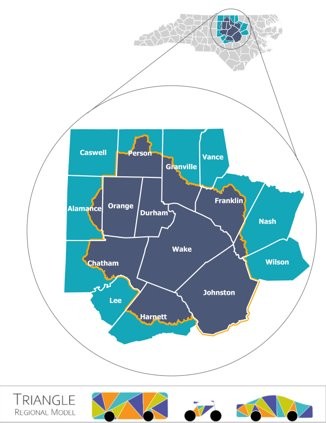
The Triangle Regional Model Generation 2 (TRMG2) is an advanced regional travel demand model. It uses a series of mathematical model to represent the transportation system and the daily multi-modal travel choices that people make. The TRM is the principal analytical tool used by transportation agencies in our region to develop and evaluate transportation strategies that support the mobility, accessibility, economic health and quality of life for the Triangle region. The TRM covers all of Wake, Durham, and Orange counties; and portions of Alamance, Chatham, Franklin, Granville, Harnett, Johnston, Nash, and Person counties. This area covers approximately 3,533 square miles, including all or part of 40 jurisdictions. The area is divided into 2,965 TAZs (Traffic Analysis Zones) that include a total of 1,057,590 jobs and 2,001,649 people (2020). The modeled transportation system includes 16,368 miles of roadways and 121 transit routes operated by 10 transit systems encompassing some 60,000 service miles. Resulting travel demand captures choices related to the number and types of trips people make, the mode (walk, bike, transit, auto) they use to travel, the choice of destination, and the paths used to reach that destination.
Travel Demand Modeling
The TRM is jointly developed and mantained as a partnership between the Capital Area MPO, the DCHC MPO, GoTriangle, and NCDOT, through the N.C. State Intitute for Transportation Research and Education (ITRE).
Socio-economic guide totals summarize the major elements of the socioeconomic forecasts for different portions of the area covered by the TRM. The estimated 2020 and forecasted 2055 population and employment are key inputs into the TRM which generates important travel demand information. For forecast data, the MPO uses a land use allocation process called CommunityViz that is based on county-level 2055 guide totals and effectively distributes the population and employment growth across the region.
The most recent release of the TRMG2 can be found here:
Staff Contact: